


The governor of California has signed a bill into law that’s meant to streamline the processing of applications to study psychedelics and marijuana.
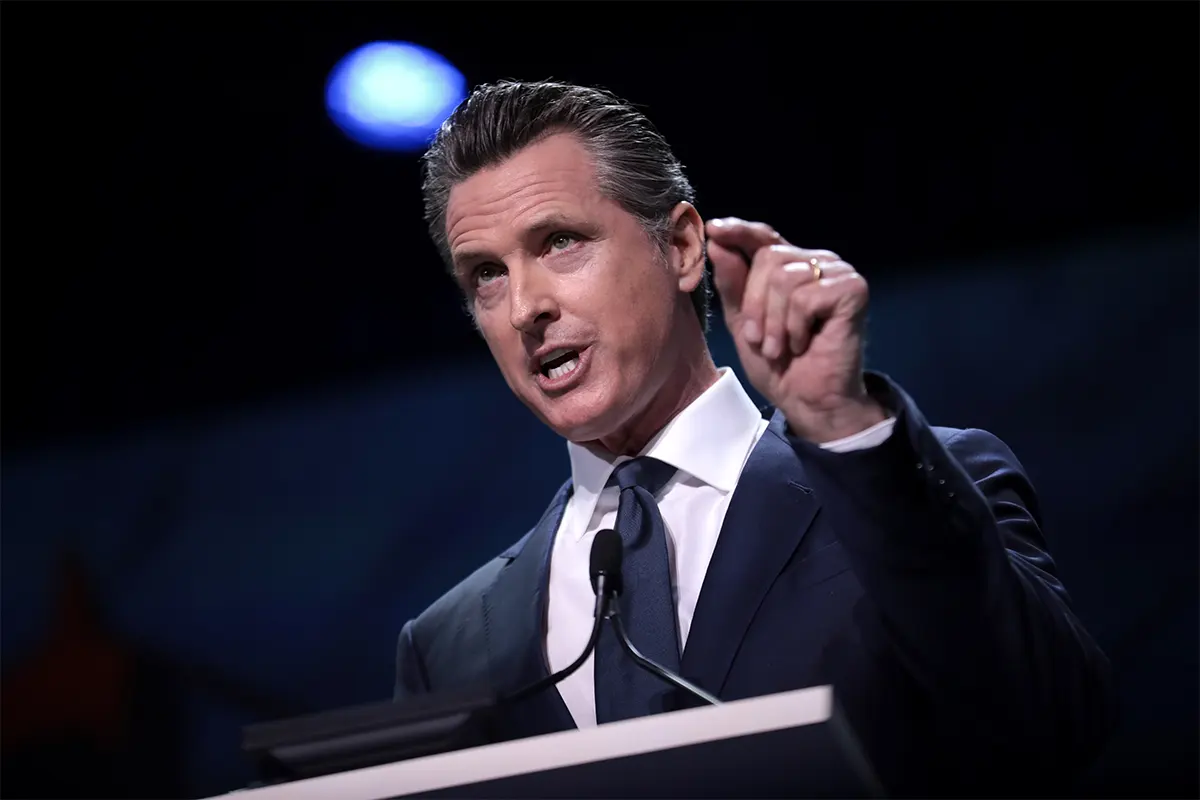
While advocates have experienced a series of setbacks in the push to provide legal access to certain psychedelics over the past several sessions, Gov. Gavin Newsom (D) approved the modest reform on Thursday, about two weeks after it cleared the legislature.
The legislation from Assemblymember Marie Waldron (R) is meant to help clear a logjam of psychedelics study applications overseen by the Research Advisory Panel of California (RAPC), which has almost 70 pending proposals.
READ: This Is Your Brain on Psilocybin Mushrooms
The body hasn’t met since last August following a policy change that prevented it from holding closed-door meetings. Members decided to suspend their activities because they’re prohibited under existing law from publicly disclosing applicants’ trade secrets and other confidential information.
To resolve the issue, the legislation reauthorizes the panel to carry out their duties in closed-door meetings, freeing them up to process the backlog.
Under the newly enacted law, the panel will be directed to provide a report to lawmakers by January 1, 2026 providing an update on the backlog of applications, including the number reviewed and the number still yet to be reviewed, as of the report’s submission.
Subscribe to the Drop In by DoubleBlind. Your essential newsletter covering the world of psychedelics. Trusted by 100k+ readers.
The signing of the legislation comes after another psychedelics bill was withdrawn by the sponsors last month due to a lack of support in a key Assembly committee. The “Heal Our Heroes Act” would have authorized a pilot program to provide psilocybin treatment to military veterans and former first responders.
The bill’s introduction came weeks after a Senate committee also effectively killed a broader bill that would have legalized psychedelic service centers where adults 21 and older could have accessed psilocybin, MDMA, mescaline and DMT in a supervised environment with trained facilitators.
It had been drafted in a way that was meant to be responsive to concerns voiced by the governor last year when he vetoed a broader proposal that included provisions to legalize low-level possession of substances such as psilocybin.
Instead, the revised bill would have provided regulated access to psychedelics in a facilitated setting, without removing criminal penalties for possession outside of that context. It did not lay out any specific qualifying medical conditions that a person would need to have in order to access the services.
Separately, a California campaign to put psilocybin legalization on the state’s November ballot recently announced that it did not secure enough signature to qualify in time for a deadline.
READ: The DOJ Doesn’t Want to Pay the Church of the Eagle and the Condor’s Legal Fees
Another campaign filed and then abruptly withdrew an initiative to create a $5 billion state agency tasked with funding and promoting psychedelics research last year.
A third campaign also entered the mix late last year, proposing to legalize the possession and cultivation of substances like psilocybin, LSD, MDMA, DMT, ibogaine and mescaline. People could buy them for therapeutic use with a doctor’s recommendation. Advocates for that measure still have time to gather and turn in signatures.
The California Legislative Analyst’s Office (LAO) has since released its review of that proposal, outlining not only the plan’s policy implications but also its potential fiscal impacts on the state—which the report calls “various” and “uncertain.”
Some California municipalities, meanwhile, are pushing forward with reform on the local level. The city of Eureka, for example, adopted a resolution in October to decriminalize psychedelic plants and fungi and make enforcement of laws against personal use, cultivation and possession a low priority for police. It’s at least the fifth local jurisdiction in the state to embrace the policy change. Others include San Francisco, Oakland, Santa Cruz and Arcata.
*This story originally appeared on Marijuana Moment.
DoubleBlind is a trusted resource for news, evidence-based education, and reporting on psychedelics. We work with leading medical professionals, scientific researchers, journalists, mycologists, indigenous stewards, and cultural pioneers. Read about our editorial policy and fact-checking process here.
DoubleBlind Magazine does not encourage or condone any illegal activities, including but not limited to the use of illegal substances. We do not provide mental health, clinical, or medical services. We are not a substitute for medical, psychological, or psychiatric diagnosis, treatment, or advice. If you are in a crisis or if you or any other person may be in danger or experiencing a mental health emergency, immediately call 911 or your local emergency resources. If you are considering suicide, please call 988 to connect with the National Suicide Prevention Lifeline.
DoubleBlind Mag Read More