
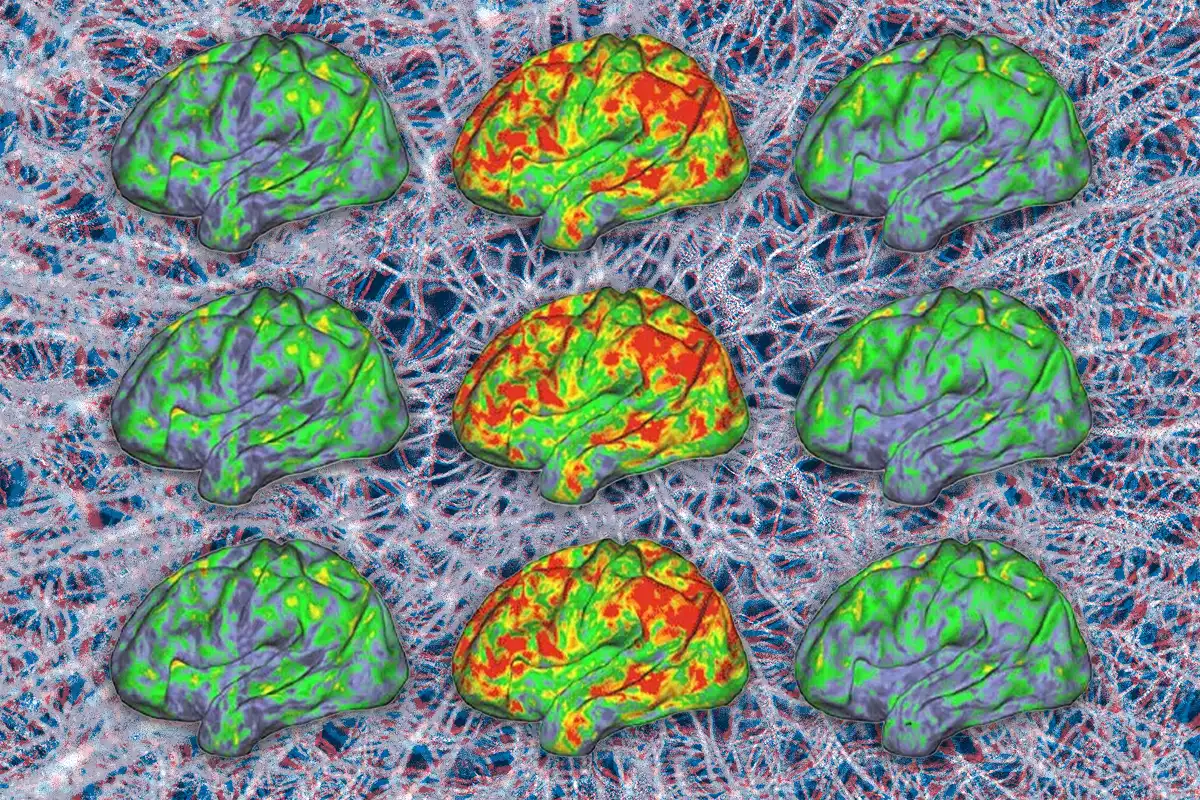


How does psilocybin have therapeutic effects on the brain? This question underlies a significant study, published on July 17 in the journal Nature, that delves into psilocybin’s impact on the brain’s functional connectivity. While previous studies have mostly focused on psilocybin’s impact on individual cells or isolated regions in the brain, researcher Joshua Siegel and his colleagues at Washington University School of Medicine in St. Louis took a more zoomed-out approach: using fMRI scans. They studied how psilocybin alters networks of neurons across the brain, which is a more nuanced approach than previous research.
The researchers studied seven healthy adults before, during, and after a psilocybin trip by taking 18 fMRI scans of their brains, using this abundance of precise data to glean insights into the dynamics of brain network changes over time. They found that psilocybin caused groups of neurons that normally fire together to become desynchronized, particularly within the default mode network (DMN). The DMN is thought to create our sense of space, time, and self, and is involved in introspective activities such as daydreaming and memory. Notably, even after the acute effects of psilocybin wore off, its disruptive effects on the brain’s networks lingered for weeks.
These lingering effects suggested that the benefits of some psychedelic therapies are not permanent. “Treatments with psilocybin, even though they are effective, don’t last forever. At some point, they need to be done again,” noted Dr. Jan Ramaekers, a professor of psychopharmacology at Maastricht University in the Netherlands, to the New York Times.
Interestingly, the role of “grounding” exercises was investigated for the first time in this study. Participants were asked to complete simple tasks that forced them to focus on what was happening around them. This exercise temporarily diminished psilocybin’s effects on the brain, which could be observed by the calming of activity in the scans. Grounding techniques are sometimes used by psychedelic therapists to reduce the intensity of psychedelic trips. The study appeared to show that redirecting attention from internal experiences to external surroundings can lessen the drug’s impact on brain networks. These findings thus shed light on potential therapeutic strategies to manage or enhance psychedelic experiences.
Dr. Siegel told the New York Times that scrambled and desynchronized brain activity was “most likely a driver of neuroplasticity, the brain’s ability to form new ways of thinking and a hallmark of how psychedelic medicine can help patients break destructive thought patterns.” Researchers saw such “massive changes induced by psilocybin” that some study participants’ brain-network patterns resembled those of a different person entirely, noted Nature in a follow-up report.
“It almost makes you a different person, so to speak,” Dr. Siegel said.
DoubleBlind is a trusted resource for news, evidence-based education, and reporting on psychedelics. We work with leading medical professionals, scientific researchers, journalists, mycologists, indigenous stewards, and cultural pioneers. Read about our editorial policy and fact-checking process here.
DoubleBlind Magazine does not encourage or condone any illegal activities, including but not limited to the use of illegal substances. We do not provide mental health, clinical, or medical services. We are not a substitute for medical, psychological, or psychiatric diagnosis, treatment, or advice. If you are in a crisis or if you or any other person may be in danger or experiencing a mental health emergency, immediately call 911 or your local emergency resources. If you are considering suicide, please call 988 to connect with the National Suicide Prevention Lifeline.
DoubleBlind Mag Read More