
Shannon Gray, communications supervisor for the division sent an email with a link to the job description:“This position will serve as a senior authority over the statewide implementation of SB23-290 related to licensing and regulating the cultivation, manufacture, dispensation, transportation, and testing of natural medicines, including licensing individuals working in these businesses and licensing healing centers.”
The salary range is between $87,000 and $113,000, according to Gray.
The division received $530,000 in general funding for fiscal year 2023-2024 to help it get on its feet until it’s sustainable from the money it will generate from the licensing fees. Although the exact cost of a license has not been determined, the division is considering $2,000 annually per facility.
“Facilitators,” as Mendiola called them, who will serve customers, will also need a division-issued license, for as much as $3,000 per person. A license to provide counseling or social work is not obligatory, she said.
To find out what concerns people around the state had about the new natural medicine regulation, the team – a handful of people on loan from the cannabis enforcement division – held virtual listening sessions. Open to interested parties via Zoom link, near-weekly sessions started in September and ran for a few months, with topics such as first and multi-responder training, public education campaigning, and cultivating practices. They learned, for example, that in rural communities with limited internet access, classified ads and radio advertising would be better promotion strategies than hoping people learn about the new division online.
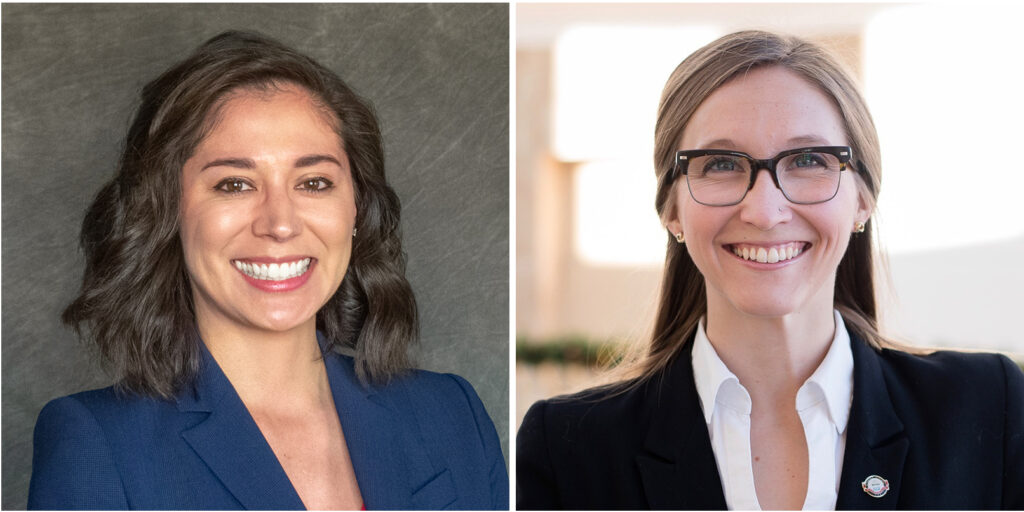
Courtesy photosDominique Mendiola, left, and Allison Robinette.
Now that the law exists, the division will oversee licensing at healing centers, where natural medicine could be administered to individuals 21 and older. The division will also keep an eye on the licensing and regulation of the cultivation and manufacture of medicines and testing facilities. Its other tasks include data collection, promotion, and training.
“That includes data collection around law enforcement incidents, adverse health events, consumer protection claims, things like that,” Mendiola said. “We’re also going to be responsible for developing public education materials as well as training materials for first responders, like law enforcement or EMS.”
“This year when the session ended … we immediately began that implementation work,” which also involved creating a new website for the division, she said.
Oregon is the only other state known to have a similar office, but Colorado’s will regulate more substances. Oregon’s program focuses on psilocybin only, whereas Colorado’s could also include psilocin, another magic mushroom ingredient, as well as Ibogaine, mescaline, and dimethyltryptamine (DMT), all other plant-based and/or naturally occurring psychoactive substances, she said.
The division expects to start issuing licenses in December 2024.
Colorado Public Radio Read More